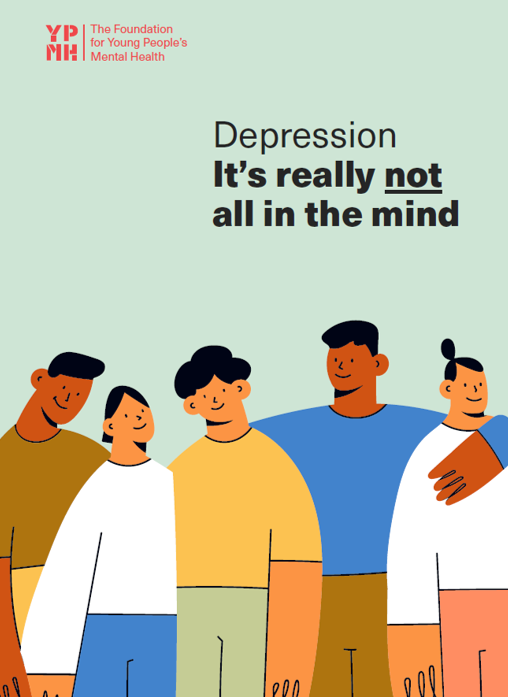
Depression – It’s really not all in the mind brings together the research and innovation carried out by YPMH since 2019. Designed to be clear and accessible, the guide aims to support young adults, parents, and those working in non-clinical roles across education, youth organisations, charities and workplaces.
Our goal is to improve understanding of why and how depression develops in children and young people up to around 25 years of age, and to offer practical, evidence-based approaches that help individuals, families, and organisations prevent depression and reduce its severity.
Depression - It's really not all in the mind:
Summarises the factors and mechanisms that can lead to depression, such as societal and social factors; individual options and choices, experiences and underlying conditions, and psychological characteristics; and the influence of these factors on biological systems associated with depression.
Explores the effects of everyday things, such as the food we eat and chronic stress, on the biological mechanisms that can lead to depression – and what we can do to reduce risks.
Describes approaches to help individuals, parents and carers to make effective change.
Outlines methods to facilitate change in organisations and in government policy
Professor Peter B. Jones, University of Cambridge Professor of Psychiatry, said:
'Depression – It’s really not all in the mind' brings together current insights from social, psychological and biological research in a clear and accessible way.
The more we learn about depression, the more we realise it’s a whole-person issue. It involves the world we experience, our psychology, the food we eat and how it affects the bacteria in our gut, and the biological changes these influences cause. While complex, this deeper understanding opens new paths to preventing and treating depression more effectively.
We hope that you will find this publication useful. To explore opportunities for collaborating with us to apply the approaches described in the publication, please contact us.